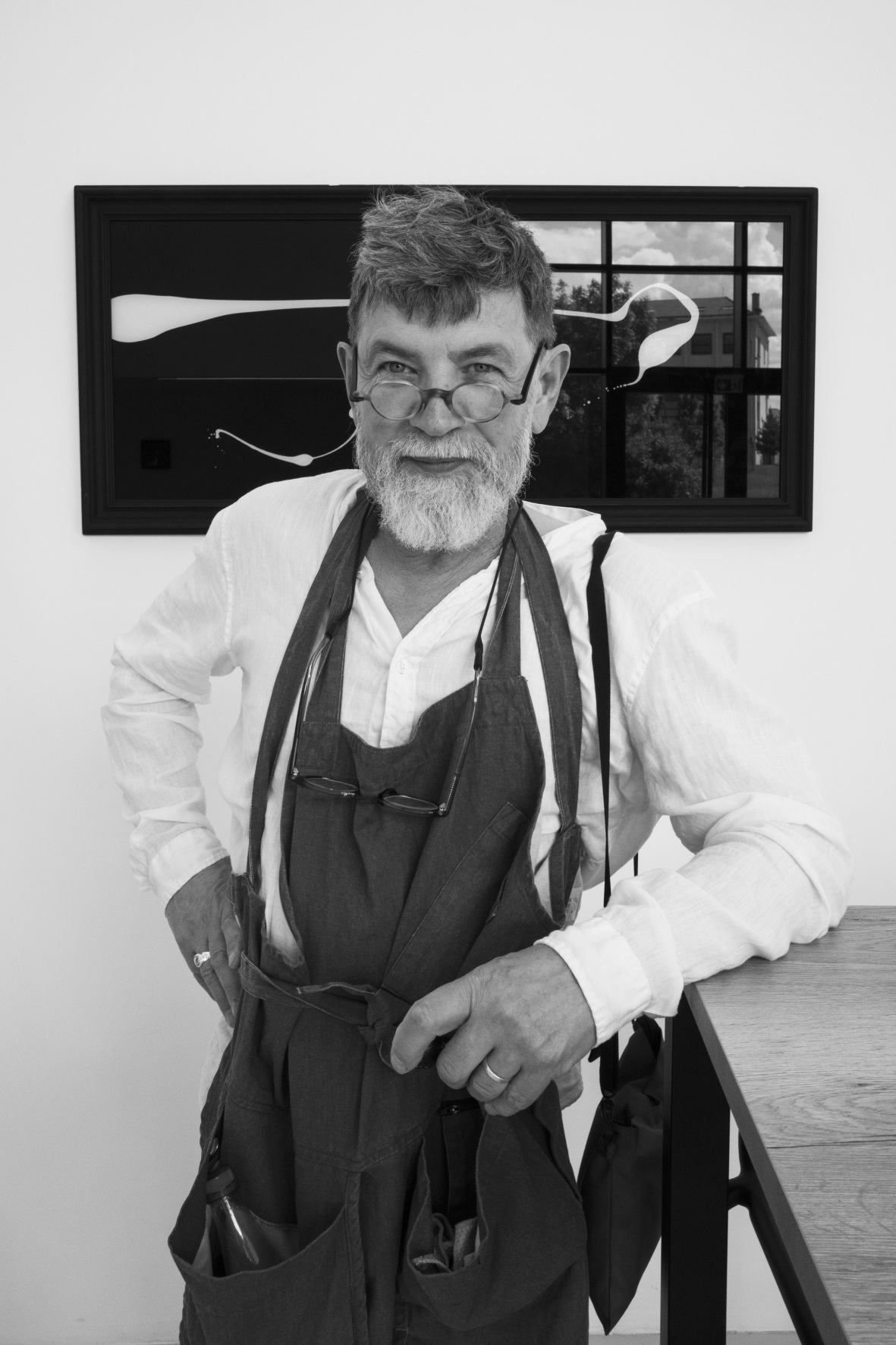
Philippe Favier: From Saint-Etienne to Global Art, A Sudden End
The art world recently mourned the loss of a truly singular talent, Philippe Favier, who passed away at the age of 68 in a tragic car accident on March 7th. Favier, a master known for his meticulously intricate miniatures and his unique approach to art-making, left an indelible mark on contemporary art. His sudden departure from his studio in Châteaudouble, Var, on his way home to Nice, brought to an abrupt close a career characterized by an absolute singularity, as aptly noted by publications like *Le Monde*. This article delves into the remarkable journey of an artist who defied conventions, transforming the "minuscule" into a grand statement.
The Genesis of a Singular Vision: From Haberdashery to Beaux-Arts
Born in Saint-Etienne on June 12, 1957, Philippe Favier’s childhood was anything but ordinary, providing fertile ground for his imaginative spirit. As an only child, he often played alone, inventing worlds within the two magical realms his parents orchestrated. During the week, their bustling haberdashery, overflowing with ribbons, buttons, and textiles, offered a sensory feast of textures, colors, and minute details. This intimate exposure to myriad small, beautiful objects and their meticulous arrangement undoubtedly influenced his later artistic fascination with the tiny and the crafted. On weekends, the family transformed into proprietors of a lively dancing hall, introducing young Philippe to a different kind of vibrancy, perhaps hinting at the dynamic energy he would later imbue into his static works.
Favier was, by his own admission, a non-conformist. He struggled with the rigid structure of conventional schooling, preferring to chart his own course. Before finding his true calling, he explored various professions, including a stint as a press cartoonist for *L'Hebdo de Saint-Étienne* in 1977 and even as a psychiatric nurse. These diverse experiences, far from being detours, likely broadened his understanding of the human condition and refined his observational skills – crucial for an artist who would later distill vast narratives into tiny forms.
His formal artistic journey began in 1979 when he enrolled at the École des Beaux-Arts in Saint-Étienne. This period proved pivotal, placing him under the tutelage of influential figures such as Bernard Ceysson, who would later become a renowned museum director (including the Centre Pompidou) and gallerist, and Daniel Abadie, who championed Favier’s work, notably with an exhibition at the Jeu de Paume in 1996. While Favier initially experimented with conceptual art, a common path for emerging artists of his era, it wasn't long before he found his distinctive voice – a style that was deceptively simple, almost childlike, yet profoundly sophisticated.
The Man of the Minuscule: Redefining Scale and Material
Philippe Favier’s artistic breakthrough lay in his embrace of the miniature. At a time when much of the art world celebrated monumental sculptures and expansive canvases, Favier deliberately moved in the opposite direction. He began creating incredibly small figures, drawing them with pen on paper, then meticulously cutting them out and pinning them directly onto walls. This act of decontextualization and re-presentation became a hallmark of his practice, turning entire exhibition spaces into intricate, sprawling narratives composed of countless tiny elements.
His genius was in transforming the overlooked and the everyday into extraordinary art. Much like his childhood experience in the haberdashery, Favier saw potential in almost any material. He appropriated geographical maps, historical archives, personal photographs, pebbles, shards of glass, and even empty sardine cans, using them not merely as surfaces but as integral components of his work. This "stakhanovist" approach, as one source described it, led to an incredibly prolific output, each piece infused with a blend of meticulous craftsmanship and whimsical narrative.
Favier’s work often invites viewers to lean in, to discover the micro-narratives embedded within his sprawling installations. This intimacy is a deliberate counterpoint to the detached viewing experience often associated with large-scale art. It demands engagement, curiosity, and a willingness to explore worlds within worlds. His miniatures, often in stark black and white, possessed a timeless quality, evoking old engravings or scientific illustrations, yet imbued with a contemporary, often surreal, sensibility. For any aspiring artist, Favier's career offers a profound lesson:
true originality often lies in exploring avenues overlooked by others, transforming perceived limitations (like small scale) into powerful strengths.
Global Recognition and Enduring Legacy
Philippe Favier's unique artistic language quickly resonated beyond the confines of Saint-Etienne. His work first gained significant traction in his hometown, exhibiting early on at the newly established Musée d'Art Moderne under the direction of Bernard Ceysson. From there, his reputation spread rapidly across France and, eventually, globally. Major art centers like Tokyo and New York began to appreciate his distinctive vision, leading to exhibitions in prestigious galleries and institutions worldwide. He was represented by renowned gallerists such as Yvon Lambert in Paris and Guy Bärtschi in Geneva, establishing strong ties with the Swiss art scene, particularly through his diverse printmaking techniques.
Official institutions also recognized his talent. Favier collaborated with the historic Sèvres porcelain manufactory on two occasions, bringing his delicate sensibility to the world of fine ceramics. One of his most ambitious projects was the monumental "Géographie à l’usage des gauchers" (Geography for Left-Handers), created during his year-long residency at the MAC Lyon in 2004. This expansive work, described as cultivated, humorous, and fantastical, perfectly encapsulated his ability to imbue intellectual concepts with a playful, accessible spirit. His artistic reach also extended to public commissions, such as the "Chronocyle" created in Saint-Étienne for the passage into the year 2000, demonstrating his capacity to work on different scales and for various contexts.
Despite his international acclaim, Favier remained an artist who charted his own course. His brief and challenging experience at the Villa Médicis in Rome in 1985, where he struggled to adapt to its traditional rhythms, further underscored his "inclassable" nature. He was an artist who needed freedom to create, unfettered by institutional expectations. This independence was key to maintaining the authenticity of his unique voice throughout his career.
Philippe Favier: Renowned Painter Dies in Tragic Car Accident left an indelible void in the art world. The news of his passing in the **Philippe Favier accident** spread swiftly, prompting reflections on his profound impact. While his works may not have always commanded the astronomical prices of some contemporaries, their intrinsic value lies in their originality, their meticulous execution, and their enduring capacity to captivate and provoke thought.
Remembering Philippe Favier: The Master of Miniature Art reminds us of the profound loss to the art community. His legacy encourages us to look closer, to appreciate the beauty in the small details, and to never underestimate the power of an unconventional artistic vision. Philippe Favier’s journey from a childhood surrounded by ribbons and buttons to international recognition is a testament to the enduring power of individuality and artistic integrity.
Conclusion
Philippe Favier's sudden death in a car accident marked the end of an extraordinary artistic journey that began in the unassuming streets of Saint-Etienne and touched galleries and collectors across the globe. He was a visionary who championed the minuscule in an age of the monumental, transforming everyday objects and tiny drawings into profound statements. His unique approach, characterized by meticulous detail, playful inventiveness, and a refusal to conform, secured his place as one of the most original voices in contemporary art. While the circumstances of the **Philippe Favier Accident** are tragic, his legacy of ingenuity, humility, and the endless possibilities of artistic expression will undoubtedly continue to inspire future generations to find their own singular path.